
Roofing
How to Find a Roof Leak: What North Florida Homeowners Can Check (and When to Call a Roofer)

A brown stain spreading across the bedroom ceiling. A drip in the hallway after the last afternoon storm. Or nothing you can see at all, just a musty smell in the attic and a feeling that something isn’t right. Roof leaks rarely announce themselves clearly, and in North Florida, where heavy rain, afternoon thunderstorms, and tropical systems keep coming well into the fall, a small leak can turn into a big repair quickly.
At Creative Concepts, we handle roof repair for homeowners across Lake City and the surrounding area, and finding the leak is almost always the hardest part of the job. Here’s how to track down where the water is coming from, what you can safely do yourself, and when it’s time to call a professional.
Why the stain is rarely right under the leak
The first thing to know is that the wet spot on your ceiling is usually not where the roof is damaged. Water that gets through the roof covering lands on the underlayment and decking, then runs downhill along rafters, trusses, and pipes until it finds a gap or soaks into the drywall. It can travel several feet, sometimes more, before it ever shows up inside your home.
That’s why guessing and patching directly above the stain often fails. The real entry point is almost always higher up the roof than the stain, so the search starts at the stain and works uphill.
Start inside: the attic is your best clue
If you have attic access, this is the most useful place to look, and the safest. Do it during daylight, or with a good flashlight, ideally while it is raining or soon after.
- Look for dark stains, damp insulation, or wet wood on the underside of the roof deck, especially above the ceiling stain and uphill from it.
- Follow the water trail. Streaks on rafters or trusses usually point toward the entry point.
- Check around anything that passes through the roof: plumbing vent pipes, bathroom and kitchen exhaust fans, chimneys, and attic vents. These are the most common leak sites.
- Look for daylight. Small pinholes of light coming through the deck around a pipe or vent often mean the seal around it has failed.
- Notice the smell. A musty odor or visible mold growth on the wood means moisture has been getting in for a while, not just since the last storm.
Take photos of everything you find. They help us diagnose the problem faster, and they matter if you end up filing an insurance claim.
Then check the roof surface from the ground
You do not need to climb up to learn a lot. Walk around the house, ideally with binoculars, and look for these common problem spots:
- Missing, cracked, curling, or lifted shingles. Wind and age are the usual causes, and a single missing shingle can let in a surprising amount of water.
- Damaged or rusted flashing. Flashing is the metal that seals the joints where the roof meets a chimney, wall, skylight, or vent. When it pulls loose or corrodes, water follows the gap right in.
- Cracked or dried-out pipe boots. The rubber collar around a plumbing vent pipe is a top leak source, because the rubber breaks down in our sun and heat well before the shingles do.
- Granules in the gutters. A lot of shingle grit in your gutters means the surface is wearing thin. Our signs your roof needs replacement guide covers what that wear looks like.
- Valleys where two roof planes meet. These channels carry a lot of water, and debris or damaged shingles here cause frequent leaks.
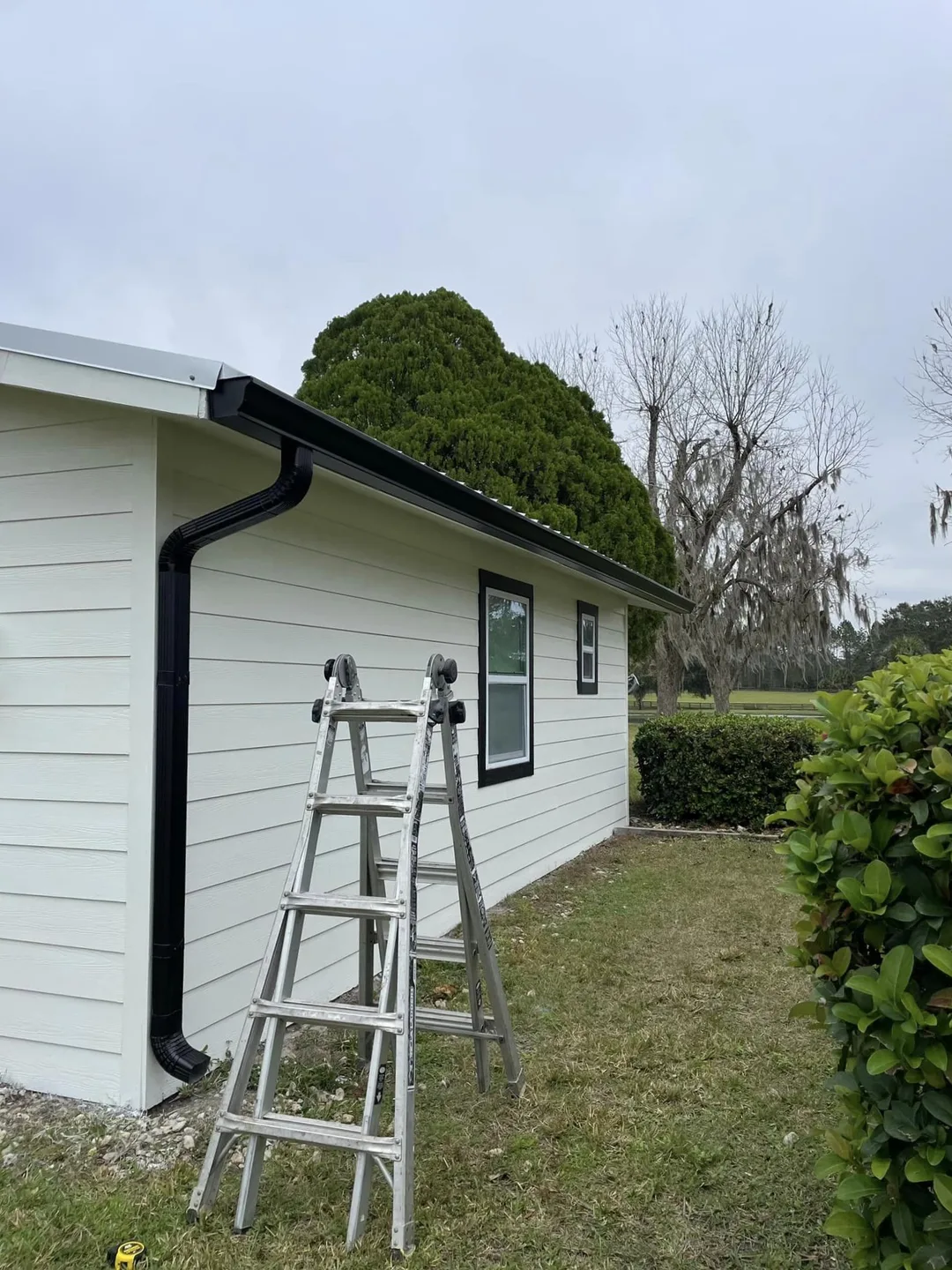
- Clogged or sagging gutters. Water that backs up at the roof edge can get under the shingles and into the fascia. If your gutters are overflowing, a properly installed set of seamless gutters can solve a problem that looks like a roof leak.
The water test: a safe way to confirm the source
If you still can’t pinpoint it, a controlled water test can help, ideally with a second person.
- One person goes inside the attic (or stands below the stain) with a flashlight and a bucket.
- The other uses a garden hose from the ground or a low, safe spot, wetting one small section of roof at a time, starting low and working uphill. Soak each section for several minutes before moving up.
- Watch for the first drip. The section you were wetting when water appears inside is the neighborhood of the leak.
Go slowly. If you spray the whole roof at once, you will not know which spot let the water in. And stay off the roof itself while it is wet or in poor light. Roof surfaces are slick, and falls are one of the most common serious home-repair injuries.
Common leak causes in North Florida specifically
Our climate is hard on roofs in ways that are easy to miss until water shows up inside:
- Tropical storm and hurricane season. It runs through the end of November, and wind-driven rain pushes water sideways and up under shingles that would shed ordinary rain. Our hurricane roof preparation checklist walks through what to inspect before and after a storm.
- Fallen limbs and debris. Oaks and pines drop branches that can puncture or lift roofing, and piled leaves hold moisture against the roof.
- Heat and UV. Months of intense sun bake sealants, rubber boots, and shingle surfaces, which is why flashing and vent seals tend to fail before the field of the roof does.
- Humidity. Slow leaks in a humid attic grow mold fast, so a “small” leak can mean a bigger problem by the time you notice it.
What to do right now if you have an active leak
Even before you know where the water is coming from, you can limit the damage:
- Move furniture and valuables out of the way, and put a bucket under the drip.
- If the ceiling is bulging with water, carefully poke a small hole at the lowest point of the bulge to let it drain into a bucket. A controlled drain is better than a ceiling that collapses.
- Photograph the damage inside and, if you can do so safely from the ground, outside. Do this before any cleanup.
- Call a roofer promptly, especially if more rain is coming. A temporary tarp or sealant is far cheaper than repairing a soaked ceiling and insulation.
- Do not climb onto a wet roof. Temporary tarping is quick work for a trained crew with the right safety equipment, and a risk for everyone else.
Many homeowners also wonder how their insurance fits in. Keeping your photos and a record of when you first noticed the leak helps if you later file a claim. If storm damage is involved, the Florida Division of Emergency Management’s FloridaDisaster.org is a good starting point for storm-recovery resources, and the Florida Office of Insurance Regulation at floir.com has consumer information on property claims.
Repair or replace: what the leak is telling you
Once the source is found, the next question is whether it’s a repair or something bigger. A single failed pipe boot, a few lifted shingles, or a loose piece of flashing is typically a quick, contained repair. Leaks in several different places, a roof that is nearing the end of its service life, or widespread granule loss usually point toward replacement. We’ll tell you honestly which one you’re looking at. If a full roof replacement is the better value, we’ll explain why, and if a repair will do the job, that’s what we’ll recommend. If you’re weighing a longer-lasting option, a metal roof is worth a look for North Florida’s weather.
The National Roofing Contractors Association also publishes helpful homeowner guidance at nrca.net on what to expect from a quality roof repair, and FLASH (Federal Alliance for Safe Homes) has practical storm-readiness guides for Florida homes.
When to call a professional
Call a roofer right away if you notice any of the following:
- A leak that keeps coming back, even after a patch.
- Water stains that are spreading, or a ceiling that is sagging or bulging.
- Visible roof damage after a storm, such as missing shingles, exposed decking, or lifted flashing.
- Mold, a musty smell, or damp insulation in the attic.
- Any situation where reaching the damage means climbing a steep or wet roof.
Before you hire anyone, confirm their license. In Florida you can look up a contractor for free through the state’s license lookup at MyFloridaLicense.com, and you should be wary of anyone who knocks on your door right after a storm and asks for payment up front.
Get a straight answer on your roof leak
Creative Concepts is a licensed and insured, full-service contractor based at 618 SW Florida Gateway Blvd in Lake City. We provide free inspections and honest repair recommendations for homeowners in Lake City, Live Oak, Alachua, Gainesville, Newberry, High Springs, Lake Butler, Fort White, Jacksonville, and the surrounding area. You can also see the work we do in your area on our Lake City roofing page.
Dealing with a leak right now? Call Creative Concepts at (386) 984-9838 or visit creativeconcepts.cc/roof-repair to schedule a free roof inspection.
Frequently Asked Questions
Start from the stain and work uphill. Check the roof surface from the ground for missing shingles, damaged flashing, and cracked pipe boots, then use the controlled water test described above. If you still can't find it, a roofer can use moisture detection and a closer inspection to trace it.
Often yes. Leaks caused by a failed vent boot, loose flashing, or a few damaged shingles are usually contained repairs. If the roof is old and leaking in multiple places, replacement may be the better value over time.
Wet insulation and drywall can begin to degrade within days, and in North Florida's humidity, mold can start growing in as little as a day or two in the right conditions. That's why acting quickly, even with a temporary fix, matters.
We don't recommend it. Walking on a wet or damaged roof is dangerous, and a poorly secured tarp can blow off or cause more damage. Call a roofer to handle temporary protection safely.
It depends on your policy and the cause. Sudden storm damage is treated differently from long-term wear, so read your policy and document the damage with photos and dates. A written inspection from a licensed roofer can help support your claim.